
FASTag Explained: Complete Guide to Digital Toll Payments (2026)
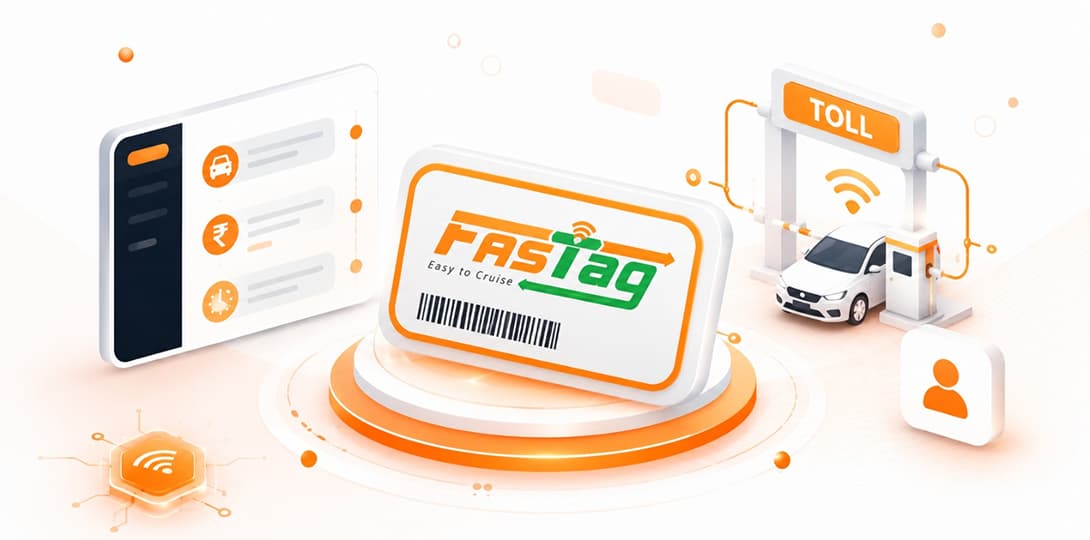
FASTag has transformed toll collection across India's national highways by making payments faster, cashless, and more convenient. Using Radio Frequency Identification (RFID) technology, FASTag enables vehicles to pass through toll plazas with minimal waiting time while toll charges are deducted automatically from the linked account. Whether you're a daily commuter, commercial fleet operator, business owner, or someone planning long-distance road trips, understanding FASTag can help you save time and enjoy smoother travel. This guide explains how FASTag works, its benefits, recharge methods, security practices, and the latest developments in India's digital toll ecosystem.
Overview of FASTag
FASTag is an electronic toll collection system used on highways across India. A small RFID sticker is attached to the windshield of a vehicle. As the vehicle passes through a FASTag-enabled toll lane, RFID readers identify the tag and automatically deduct the toll amount from the linked prepaid wallet or bank account.
The system was introduced to reduce congestion at toll plazas, minimize cash transactions, improve transparency, and encourage digital payments. Today, FASTag has become an essential part of highway travel for private and commercial vehicles.
Key Highlights
Automatic toll payment using RFID technology.
Cashless transactions at supported toll plazas.
Reduced waiting time during highway travel.
Widely accepted across national highways.
Available through multiple banks and authorized issuers.
Recharge using online banking, UPI, cards, or banking apps.
How FASTag Works
FASTag contains an RFID chip encoded with a unique identification number linked to your vehicle and payment account. When your vehicle approaches a toll booth, the RFID scanner reads the tag without requiring physical contact. The toll management system verifies the tag, deducts the applicable toll amount, and records the transaction almost instantly.
If the linked account has sufficient balance and the tag is active, the barrier opens automatically. Many issuers also send SMS or mobile app notifications confirming each successful toll transaction, allowing users to monitor spending in real time.
Major Benefits of FASTag
Faster movement through toll plazas.
Reduced fuel consumption caused by long queues.
Lower travel time on highways.
Improved transparency through digital transaction history.
Convenient online recharge options.
Less dependency on cash while travelling.
Useful for both personal and commercial vehicles.
How to Get a FASTag
FASTag is available through participating banks, authorized sales points, and online platforms. Vehicle owners generally need basic documents such as vehicle registration details, identification documents, and vehicle information depending on the issuing institution's requirements.
After activation, the FASTag is affixed to the inside of the vehicle's windshield, where it can be easily scanned by toll plaza readers.
Recharge and Account Management
Keeping adequate balance ensures uninterrupted toll payments. Most FASTag issuers allow users to recharge through:
Internet Banking
UPI applications
Debit Cards
Credit Cards
Mobile Banking Applications
Net Banking Portals
Users can also monitor transaction history, account balance, recharge status, and account activity through the issuer's mobile application or online portal.
Business Benefits
FASTag provides significant advantages for businesses operating vehicle fleets. Logistics companies, transport operators, courier services, and delivery businesses benefit from faster highway movement, reduced fuel costs, and improved operational efficiency.
Digital toll records also simplify accounting, reimbursement processes, and expense tracking while providing greater visibility into fleet operations.
Industry Insights
Electronic toll collection continues to play an important role in India's digital infrastructure initiatives. As transportation networks expand and vehicle traffic increases, automated toll systems help improve road efficiency while supporting cashless payment adoption.
Future developments may include additional intelligent transportation technologies, improved traffic analytics, and broader digital integration with highway management systems.
Security and Privacy
FASTag transactions rely on secure digital payment infrastructure managed by participating financial institutions and toll operators. Users should protect their linked accounts by enabling secure authentication methods offered by their bank or payment provider.
Recommended security practices include:
Regularly monitor transaction history.
Keep contact details updated with the issuer.
Recharge only through trusted banking channels.
Report lost or damaged FASTags promptly.
Avoid sharing sensitive banking credentials.
Best Practices
Maintain sufficient account balance before long journeys.
Ensure the FASTag remains properly attached to the windshield.
Keep vehicle registration details updated.
Review toll deductions periodically.
Replace damaged tags when necessary.
Use official banking channels for account management.
Common Issues
Some users may occasionally experience issues such as unsuccessful scans, insufficient balance, damaged tags, or delayed transaction updates. Most of these problems can be resolved by checking account status, ensuring the tag is correctly installed, or contacting the issuing institution's customer support.
Real-World Use Cases
Logistics Companies
Fleet operators can reduce travel delays, monitor toll expenses, and improve route efficiency through digital toll records.
Corporate Travel
Organizations managing employee travel can simplify expense reporting using digital transaction histories.
Government Transportation
Electronic toll collection helps improve traffic management, reduce congestion, and support modern highway infrastructure.
Mobile Applications
Many banking and payment apps provide balance checks, recharge options, transaction notifications, and account management features for FASTag users.
Latest Updates (2026)
FASTag remains the primary electronic toll collection system across India's national highways. Authorities continue to enhance digital payment infrastructure, improve toll plaza efficiency, and encourage wider adoption of electronic toll payments. Travelers should always check official announcements from highway authorities and their FASTag issuer for the latest operational updates and policy changes.
Frequently Asked Questions
1. What is FASTag?
FASTag is an RFID-based electronic toll collection system that enables automatic cashless toll payments on highways.
2. Can FASTag be recharged online?
Yes. Most issuers support online recharge through internet banking, UPI, debit cards, credit cards, and mobile banking applications.
3. Is FASTag useful for commercial vehicles?
Yes. Fleet operators benefit from faster toll crossings, digital records, improved efficiency, and simplified expense management.
4. What happens if the FASTag balance is low?
The vehicle may not be able to complete automated toll payment smoothly. Maintaining sufficient balance before travel is recommended.
5. Is FASTag secure?
FASTag uses established digital payment infrastructure. Users should follow good security practices, including monitoring transactions and using only official banking channels.
Conclusion
FASTag has become an important part of India's digital transportation ecosystem by making toll payments quicker, more transparent, and more convenient. Whether you are an individual traveler, business owner, or fleet manager, understanding how FASTag works can improve your travel experience and simplify toll management. As India's highway infrastructure continues to evolve, electronic toll collection will remain a key component of efficient road transportation. Developers interested in future mobility-related services can explore the FireAPI marketplace for available APIs or request relevant integrations as they become available.