
Blockchain Bulletin 2026: Latest Blockchain Trends, Security & Industry Guide
Blockchain technology continues to evolve far beyond cryptocurrency, becoming a foundation for secure digital transactions, decentralized applications, enterprise automation, and transparent data management. From finance and healthcare to logistics and government services, organizations are adopting blockchain to improve trust, efficiency, and operational resilience.
This Blockchain Bulletin provides a comprehensive overview of the latest developments, practical applications, industry trends, and technical insights shaping the blockchain ecosystem in 2026. Whether you're a developer exploring Web3 technologies, a business evaluating blockchain solutions, or a technology enthusiast staying informed about digital innovation, this guide offers valuable knowledge to help you understand where the industry is heading.
What Is Blockchain?
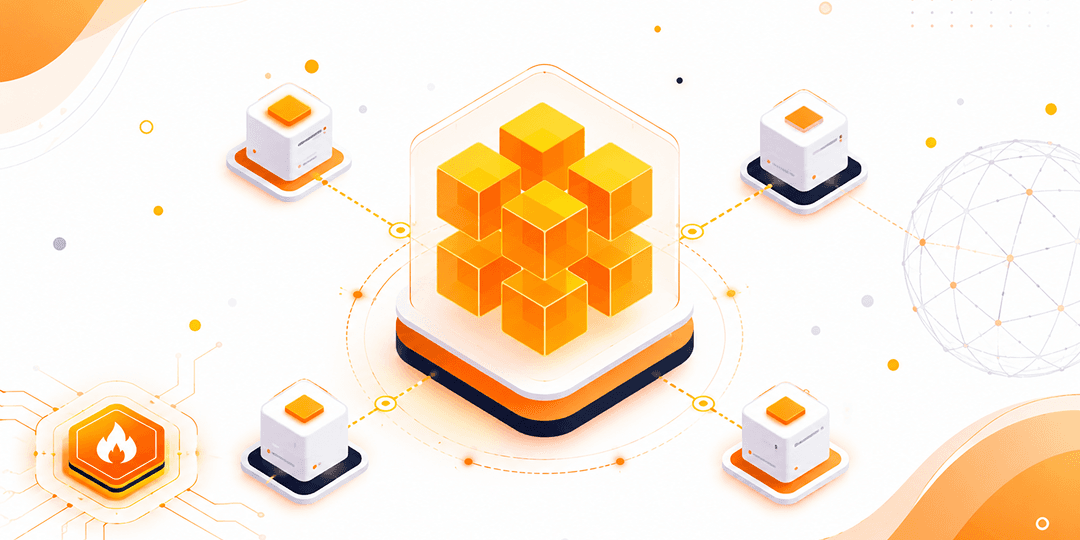
Blockchain is a distributed digital ledger that records transactions across multiple computers instead of relying on a single centralized database. Every transaction is grouped into a block, cryptographically secured, and linked to the previous block, creating a chain of immutable records.
Unlike traditional systems where one organization controls the database, blockchain distributes identical copies of the ledger across participating nodes. Every participant validates transactions through consensus mechanisms, making unauthorized modifications extremely difficult.
The technology is designed to provide transparency, integrity, traceability, and security without requiring complete trust between participating organizations.
Why Blockchain Matters in 2026
Blockchain has matured significantly over the last few years. Instead of being viewed solely as the technology behind cryptocurrencies, it is increasingly recognized as critical infrastructure for digital transformation.
Growing enterprise adoption across multiple industries
Improved scalability through Layer-2 technologies
Enhanced security for digital transactions
Expansion of decentralized finance (DeFi)
Increasing government interest in digital identity initiatives
Better interoperability between blockchain networks
Rising use of tokenized real-world assets
These developments demonstrate that blockchain is transitioning from an experimental technology into an important component of modern digital ecosystems.
Key Highlights of the Modern Blockchain Ecosystem
Decentralization
Rather than storing information on a single server, blockchain distributes data across numerous participating computers. This architecture minimizes single points of failure while improving resilience against cyberattacks and infrastructure outages.
Transparency
Public blockchain networks allow participants to verify transactions independently. This transparency improves accountability while reducing opportunities for fraud or unauthorized record manipulation.
Immutability
Once validated and added to the blockchain, transaction records become extremely difficult to modify. This creates reliable audit trails suitable for financial services, supply chains, healthcare records, and compliance reporting.
Security
Modern blockchain platforms use advanced cryptographic algorithms, digital signatures, distributed consensus, and network validation to secure transactions against tampering.
Automation Through Smart Contracts
Smart contracts execute predefined business rules automatically once specific conditions are satisfied. This reduces manual processing, minimizes errors, and accelerates digital workflows.
How Blockchain Works
Although blockchain systems differ depending on the platform, the underlying workflow remains largely consistent.
A user initiates a transaction.
The transaction is broadcast to participating nodes.
Network participants validate the transaction using a consensus mechanism.
Validated transactions are grouped into a new block.
The new block is cryptographically linked to previous blocks.
The updated ledger is synchronized across all participating nodes.
The transaction becomes permanently recorded and can be independently verified.
This distributed validation process eliminates the need for a central authority while maintaining data integrity across the network.
Major Blockchain Applications Across Industries
Financial Services
Banks and fintech companies use blockchain to enable faster cross-border payments, streamline settlement processes, reduce transaction costs, and improve fraud detection.
Supply Chain Management
Manufacturers and logistics providers use blockchain to track products from production to delivery. Transparent records improve inventory visibility, product authenticity, and regulatory compliance.
Healthcare
Healthcare organizations are exploring blockchain to securely manage patient records, improve interoperability between providers, and strengthen data privacy while maintaining auditability.
Government Services
Governments worldwide continue evaluating blockchain for digital identity systems, land registries, public record management, and secure document verification.
Digital Identity
Self-sovereign identity solutions allow individuals to control and selectively share verified credentials without relying entirely on centralized identity providers.
Intellectual Property
Creators, publishers, and media companies increasingly use blockchain to establish proof of ownership, manage licensing agreements, and verify digital content authenticity.
Latest Blockchain Trends in 2026
Enterprise Blockchain Adoption
Organizations are increasingly integrating blockchain into existing enterprise systems rather than replacing traditional infrastructure entirely. Hybrid architectures combining cloud computing, APIs, and blockchain are becoming more common across industries.
Tokenization of Real-World Assets
Assets such as real estate, commodities, financial instruments, and intellectual property are being represented as digital tokens. Tokenization has the potential to improve liquidity, enable fractional ownership, and simplify asset transfers.
Layer-2 Scaling Solutions
To improve transaction throughput and reduce costs, blockchain ecosystems continue investing in Layer-2 technologies that process transactions off the primary blockchain while preserving security guarantees.
Interoperability Between Blockchain Networks
Businesses increasingly require multiple blockchain platforms to communicate securely. Cross-chain interoperability solutions are emerging to enable data exchange and asset transfers between different blockchain ecosystems.
Integration with Artificial Intelligence
Artificial intelligence and blockchain are increasingly being used together. AI can analyze blockchain data for fraud detection, predictive analytics, and operational insights, while blockchain provides transparent and tamper-resistant records for AI-generated data and automated decision-making.
Growing Regulatory Focus
Governments and regulatory bodies continue developing frameworks for digital assets, stablecoins, and blockchain-based financial services. Clearer regulations are expected to encourage responsible innovation while improving consumer protection and institutional participation.
Business Benefits of Blockchain Technology
Blockchain is no longer limited to cryptocurrency startups. Businesses across finance, healthcare, manufacturing, retail, logistics, and government sectors are adopting blockchain to improve operational efficiency, enhance transparency, and build greater trust with customers and partners.
Improved Transparency
Every authorized participant can access the same version of transaction records, reducing disputes and improving accountability. This shared visibility is particularly valuable in industries where multiple organizations collaborate, such as supply chain management and financial services.
Enhanced Security
Blockchain leverages cryptographic techniques and distributed validation to protect data from unauthorized changes. Since records are replicated across multiple nodes, there is no single point of failure, making blockchain networks more resilient against cyberattacks.
Reduced Operational Costs
By automating verification processes and eliminating unnecessary intermediaries, blockchain can reduce administrative overhead, transaction fees, and reconciliation efforts. Smart contracts further streamline repetitive business operations.
Faster Transactions
Traditional cross-border payments and multi-party transactions often involve several intermediaries, increasing processing time. Blockchain can simplify these workflows by enabling direct, secure transactions between participants.
Improved Auditability
Every transaction is timestamped and permanently recorded, making it easier for organizations to perform audits, demonstrate regulatory compliance, and investigate historical activities.
Developer Considerations
Developers building blockchain-based applications should evaluate several technical and architectural factors before selecting a blockchain platform or designing decentralized applications (dApps).
Choose the Right Blockchain Network
Different blockchain platforms are optimized for different use cases. Factors to evaluate include:
Transaction throughput
Scalability
Security model
Smart contract support
Development ecosystem
Community adoption
Governance structure
Public vs Private Blockchain
Public blockchains provide openness, decentralization, and transparency, making them suitable for decentralized applications and digital assets. Private or permissioned blockchains restrict participation, offering better privacy, governance, and performance for enterprise use cases.
Smart Contract Development
Smart contracts automate business logic directly on the blockchain. Since deployed contracts are often immutable, developers should thoroughly test, review, and audit contract code before deployment to reduce the risk of vulnerabilities.
Integration with Existing Systems
Most organizations integrate blockchain with existing ERP systems, CRMs, payment gateways, cloud platforms, and APIs rather than replacing their current infrastructure. Careful planning helps ensure seamless interoperability.
Security Considerations
Although blockchain is designed with security in mind, applications built on top of blockchain must still follow strong cybersecurity practices.
Protect Private Keys
Private keys provide access to blockchain assets and digital identities. Businesses should implement secure key management solutions, hardware security modules (HSMs), or multi-signature wallets where appropriate.
Secure Smart Contracts
Poorly written smart contracts can expose applications to exploits. Developers should conduct code reviews, automated testing, and independent security audits before deploying contracts to production.
Identity and Access Management
Role-based access controls and strong authentication mechanisms help ensure that only authorized users can perform sensitive operations within blockchain-enabled applications.
Regulatory Compliance
Organizations should evaluate applicable regulations related to data privacy, financial reporting, anti-money laundering (AML), and know-your-customer (KYC) requirements before implementing blockchain solutions.
Performance and Scalability
As blockchain adoption increases, scalability remains an important consideration. Modern blockchain ecosystems continue to improve transaction speeds while maintaining decentralization and security.
Layer-2 Networks
Layer-2 solutions process transactions outside the primary blockchain before recording final results on the main network. This approach reduces congestion, lowers transaction costs, and improves overall throughput.
Efficient Consensus Mechanisms
Modern blockchain platforms increasingly adopt energy-efficient consensus models that improve performance while reducing computational requirements compared to earlier approaches.
Hybrid Architectures
Many enterprises combine cloud infrastructure with blockchain networks. Frequently accessed application data remains in traditional databases, while blockchain stores critical records requiring immutability and verification.
Real-World Use Cases
Financial Services
Banks and fintech companies use blockchain for international payments, trade finance, digital asset management, fraud detection, and automated settlement processes.
Supply Chain Management
Blockchain enables manufacturers, suppliers, distributors, and retailers to track products throughout their lifecycle, improving traceability and helping identify counterfeit goods.
Healthcare
Healthcare providers are exploring blockchain to securely share medical records, improve patient data integrity, and maintain comprehensive audit trails while supporting privacy requirements.
Real Estate
Property transactions often involve extensive documentation and multiple intermediaries. Blockchain can simplify ownership verification, document management, and asset tokenization.
Government Services
Governments continue researching blockchain for secure identity management, public record verification, digital certificates, and transparent administrative processes.
Education
Universities and certification authorities can issue tamper-resistant digital certificates, allowing employers and institutions to verify academic credentials more efficiently.
Best Practices for Blockchain Implementation
Clearly identify the business problem before selecting blockchain.
Choose an appropriate blockchain platform based on scalability and governance requirements.
Perform comprehensive smart contract testing before deployment.
Use secure private key management solutions.
Encrypt sensitive off-chain data wherever applicable.
Design applications with interoperability in mind.
Monitor network performance and transaction costs.
Maintain detailed documentation for developers and stakeholders.
Regularly review compliance with applicable regulations.
Plan for future scalability as transaction volumes increase.
Common Challenges
Scalability
Some blockchain networks may experience reduced performance during periods of high transaction volume. Organizations should evaluate throughput requirements and scaling options before implementation.
Regulatory Uncertainty
Blockchain regulations continue to evolve across different jurisdictions. Businesses operating internationally should stay informed about changing legal and compliance requirements.
Integration Complexity
Connecting blockchain platforms with legacy enterprise systems may require middleware, APIs, and customized integration strategies to ensure reliable data synchronization.
User Adoption
For many organizations, educating employees and customers about blockchain-based workflows remains an important part of successful implementation. User-friendly interfaces and clear documentation can significantly improve adoption.
Energy Consumption
While many modern blockchain networks have become significantly more energy efficient, organizations should still evaluate the environmental impact of the platforms they choose and consider sustainability goals when selecting technologies.
How Developers Can Explore Blockchain APIs Through FireAPI
Many blockchain applications rely on APIs to simplify integration with wallets, blockchain explorers, digital asset services, analytics platforms, and transaction monitoring tools. Instead of building every blockchain capability from scratch, developers often use APIs to accelerate development and reduce maintenance effort.
Developers can explore the marketplace on FireAPI to discover blockchain-related APIs, AI services, verification APIs, and other developer tools. Availability may vary depending on providers and supported networks.
A typical developer workflow includes:
Create a FireAPI account.
Log in to the developer dashboard.
Search for blockchain-related APIs or services.
Select an API that fits your application requirements.
Review
Choose an appropriate plan from the pricing page if applicable.
Generate an API key
Test API requests before integrating them into production applications.
If a specific blockchain API is not currently available, developers can periodically check the FireAPI marketplace for new additions or request support for the desired service.
Future Outlook for Blockchain
Blockchain is expected to play an increasingly important role in the digital economy over the coming years. Improvements in scalability, interoperability, regulatory clarity, and developer tooling are making blockchain solutions more practical for mainstream adoption.
Emerging technologies such as Artificial Intelligence (AI), the Internet of Things (IoT), decentralized identity, and tokenized digital assets are likely to complement blockchain rather than compete with it. As organizations continue modernizing their infrastructure, blockchain will increasingly serve as a trusted layer for secure data exchange and digital transactions.
Although challenges such as regulatory compliance, interoperability, and large-scale deployment remain, ongoing innovation across the industry continues to address these issues, making blockchain more accessible for businesses and developers alike.
Frequently Asked Questions (FAQs)
1. What is blockchain in simple terms?
Blockchain is a decentralized digital ledger that securely records transactions across multiple computers. Once data is recorded and verified, it becomes extremely difficult to alter, providing transparency and trust among participants.
2. Is blockchain only used for cryptocurrencies?
No. While blockchain powers cryptocurrencies, it is also widely used in supply chain management, healthcare, finance, digital identity, document verification, government services, education, and enterprise applications.
3. Why is blockchain considered secure?
Blockchain uses cryptographic algorithms, distributed consensus, and immutable transaction records. Since data is replicated across multiple nodes, unauthorized modifications become significantly more difficult than in traditional centralized systems.
4. What industries benefit the most from blockchain?
Industries including banking, fintech, logistics, healthcare, insurance, manufacturing, retail, education, government, and real estate are increasingly adopting blockchain to improve transparency, efficiency, and security.
5. Can developers integrate blockchain services using APIs?
Yes. Many blockchain platforms provide APIs for accessing blockchain data, wallets, analytics, transaction monitoring, and related services. Developers can also explore the FireAPI marketplace to discover available blockchain APIs and integration resources.
Conclusion
Blockchain has evolved into one of the most influential technologies driving digital transformation across industries. Its ability to provide transparency, security, decentralization, and tamper-resistant record keeping makes it valuable for organizations seeking trusted digital solutions.
From financial services and supply chains to healthcare and government applications, blockchain continues to expand beyond its cryptocurrency origins. As enterprise adoption grows and technologies such as AI, cloud computing, and decentralized identity converge, blockchain is expected to become an increasingly important part of modern software architecture.
For developers, staying informed about blockchain trends, security practices, and integration strategies is essential for building future-ready applications. Businesses evaluating blockchain should begin with clearly defined objectives, choose appropriate platforms, and follow implementation best practices to maximize long-term value.